Rethinking Learning, Vol. 1: We’ve Been Defining STEM Too Narrowly

Rethinking Learning, Vol. 1: We’ve Been Defining STEM Too Narrowly

We’ve Been Defining STEM Too Narrowly

What Cosmetology Can Teach Us About the Future of Career and Technical Education

By Zenda M. Walker

Every generation of educators is asked to prepare students for a future we cannot fully predict.

Today, that future is being shaped by artificial intelligence, technological innovation, demographic shifts, and a rapidly evolving workforce. In response, schools across the country are expanding STEM education and investing in Career and Technical Education (CTE) pathways that prepare students for high-demand careers.

This renewed focus is encouraging. It recognizes that students deserve multiple pathways to success and that technical expertise should be valued alongside traditional academic achievement.

Yet as I’ve watched these conversations unfold, I’ve noticed something that has stayed with me.

One licensed profession is almost always missing from the conversation.

Cosmetology.

Not because it lacks technical rigor.

But because we rarely think of it that way.

For more than two decades, I’ve worked as a licensed cosmetologist. Today, I also work alongside educators, school leaders, and families while pursuing graduate studies in education. Moving between these worlds has given me a unique vantage point. It has led me to ask a question that extends far beyond the beauty industry:

How do we decide what counts as rigorous learning?

When most people picture STEM, they imagine laboratories, robotics competitions, engineering firms, computer programming, or advanced manufacturing. Those images are familiar—and important.

But images also shape assumptions.

They influence funding decisions, career advising, public perception, and even the careers students believe are available to them.

What if we’ve confused our image of STEM with its actual definition?

Every licensed cosmetologist studies chemistry, anatomy, infection control, sanitation, state safety regulations, and applied mathematics. They analyze variables, solve problems in real time, communicate with diverse clients, manage inventory, build businesses, interpret digital analytics, and increasingly use technology to market and operate successful enterprises.

Those aren’t “soft skills.”

They are technical, scientific, entrepreneurial, and deeply human competencies.

The U.S. Bureau of Labor Statistics projects approximately 84,000 openings for barbers, hairstylists, and cosmetologists each year over the coming decade, reflecting both continued demand and workforce turnover. At the same time, education leaders continue to elevate Career and Technical Education as an essential strategy for workforce development and economic mobility.

These trends raise an important question.

If cosmetology requires technical knowledge, scientific understanding, business acumen, and professional licensure—and continues to represent a significant workforce sector—why is it so often absent from conversations about the future of work?

I don’t believe the answer is found in the profession itself.

I believe it’s found in our perception of it.

Throughout history, society has assigned different levels of prestige to different forms of knowledge. Some professions are immediately recognized as technical. Others, despite requiring equally sophisticated expertise, are viewed primarily through cultural stereotypes.

That perception matters.

Because when students don’t see certain careers respected within educational spaces, they may never recognize the full range of opportunities available to them.

This realization has become one of the foundational ideas behind what I call The Hairitage Framework™.

The Hairitage Framework begins with a simple premise:

Learning becomes more meaningful when educators use culturally rooted practices, traditions, and lived experiences as entry points to rigorous academic learning, identity development, belonging, and career-connected exploration.

Hair is not the lesson.

Hair is the bridge.

For one student, that bridge might be hair chemistry.

For another, it might be family recipes, quilting traditions, spoken word poetry, sneaker design, music production, or neighborhood entrepreneurship.

The bridge changes.

The destination does not.

The destination is deeper learning.

The Hairitage Framework challenges educators to begin with what students already know, value, and experience—not because culture replaces academic rigor, but because it creates authentic pathways into it.

This perspective aligns naturally with the goals of modern Career and Technical Education. High-quality CTE isn’t simply about preparing students for jobs. It develops critical thinking, collaboration, communication, problem solving, adaptability, and entrepreneurship alongside technical knowledge. These are precisely the kinds of durable human skills that remain essential in an economy increasingly shaped by automation and artificial intelligence.

Perhaps the question isn’t whether cosmetology belongs in STEM.

Perhaps the better question is whether our understanding of STEM has become too narrow to recognize all the places rigorous learning already exists.

Education has always evolved by expanding its understanding of intelligence, talent, and possibility.

Maybe it’s time to expand our understanding of where those qualities live.

If we truly believe every student deserves to see themselves in the future of learning, then we must also be willing to broaden our definition of what counts as valuable knowledge.

Because when we change what we recognize, we also change what students believe is possible.


About the Author

Zenda M. Walker is the founder of Know Your Hairitage LLC, an award-winning author, licensed cosmetologist, educational consultant, and graduate student at the Harvard Graduate School of Education. She is the creator of The Hairitage Framework™, an educational framework that uses culturally rooted practices as pathways to rigorous learning, belonging, identity development, and career-connected education. Rethinking Learning is her ongoing essay series exploring the ideas shaping the future of education.
Beyond the Beats: Doechii & The Power of Storytelling

Beyond the Beats: Doechii & The Power of Storytelling

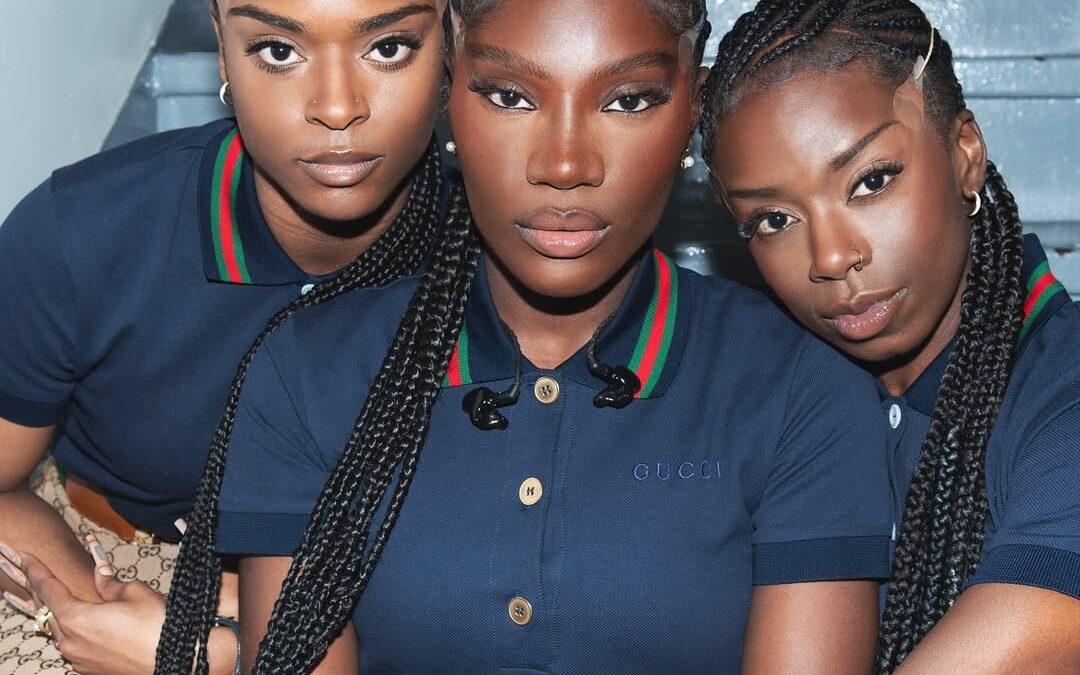
Okay, let’s be real: Doechii isn’t just a rapper, she’s a cultural phenomenon. This Tampa-born artist is absolutely killing it in the hip hop scene right now. When you watch and listen to Doechii, prepare for an experience.  Her sound is fluid.  It’s like the best of hip hop, spoken word, jazz, and R&B converging into a single, brilliant mind. Her lyricism is fire, her flow is mesmerizing, and her fashion? Don’t even get me started. It’s a captivating blend of high-fashion and street style, a true reflection of her unique identity.

But here’s the thing: Doechii’s artistry goes way beyond the surface. Her hair isn’t just an accessory; it’s an integral part of her performance, a powerful statement of self-expression. From intricate cornrows to flowing braids and the embrace of her natural coils, she’s showcasing the beauty and diversity of Black hairstyles with an unapologetic confidence. This isn’t just about fashion; it’s a profound act of cultural reclamation. Doechii is telling her fans, and the world, that their identities, their stories, and their unique expressions of self are valid, beautiful, and worthy of celebration. She’s not just a musician; she’s a cultural icon, and frankly, we’re all here for it.

Her recent performance of “Denial is a River” and “Boiled Peanuts” from her 2024 Alligator Bites Never Heal album on the The Late Show with Steven Colbert solidified her status as a rising force. But beyond the infectious beats and impressive rhymes, you can’t help but be captivated by the synchronized braiding routine performed by Doechii and her dancers. The intricate braids, meticulously crafted in unison, weren’t just a visually stunning performance element; they were a powerful symbol of connection and shared history. What a beautiful metaphor for the interconnectedness of the Black community, highlighting the shared struggles and triumphs that bind us together. Her NPR Tiny Desk performance didn’t disappoint either, as her entire band collectively celebrated the art of braids and ornamentation to compliment an iconic medley of unforgettable tunes.

Doechii’s hairstyling choices extend far beyond the braids that stole the show on Colbert and Tiny Desk. From sleek cornrows and cosplay wigs to voluminous afros, she consistently uses her hair to express herself and complement her music. Each style feels like a deliberate choice, adding another layer of depth to her artistry.

Doechii’s meticulous attention to detail, from her music to her fashion and hairstyling, is a testament to her dedication to her craft. Her hair choices are not just an afterthought; they are a powerful extension of her artistry, a way to connect with her audience on a deeper level, and a celebration of her cultural heritage. In a world saturated with generic pop stars, Doechii’s commitment to authenticity and storytelling makes her a truly the breath of fresh air that we all need right now.

Out Now: Alligator Bites Never Heal  (19 Songs)

Visit www.knowyourhairitage.com to learn more about the history and cultural significance of Black hairstyles!

Zenda on be Well News 12 with Shannon Lanier

Zenda on be Well News 12 with Shannon Lanier

NEWS

Zenda on be Well News 12 with Shannon Lanier

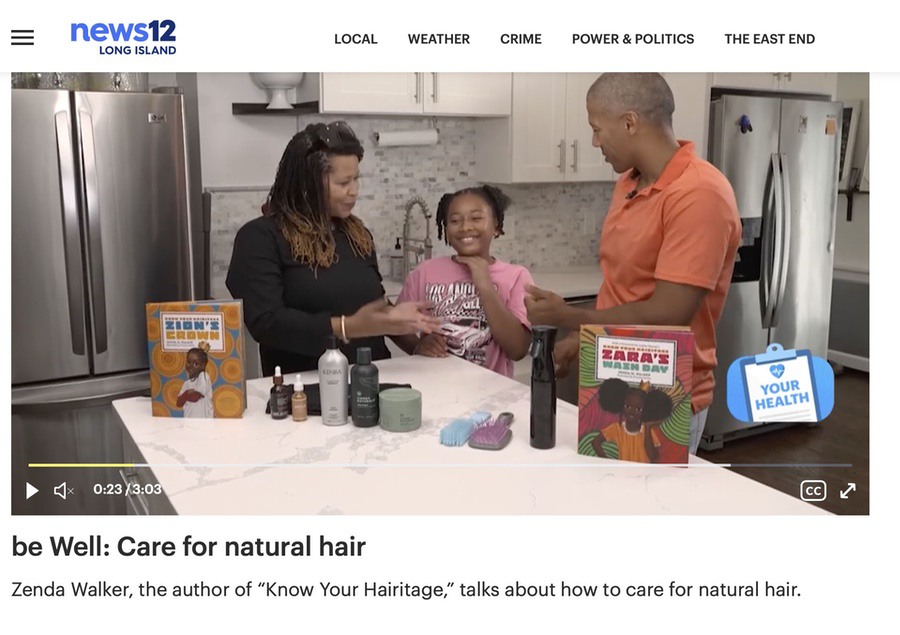
We all know how important our hair is to us. Zenda Walker, the author of “Know Your Hairitage,” talks about how to care for natural hair on News 12 LongIsland on Oct 15, 2024 at 9:33 AM

Watch the video clip: Zenda on News 12 LongIsland Video

What I Discovered During My Author Journey

What I Discovered During My Author Journey

NEWS

Here's some exciting news & information about KYH and the great ways we are infusing cultural beauty traditions around the world.

What I Discovered During My Author Journey

When I set out to self-publish “Zara’s Wash Day,” I believed the story would be impactful. Since then, I’ve discovered that the book’s backstory is deeply tied to its development during the 2020 pandemic. The height of the pandemic brought a wave of fear, anxiety, and sadness as we faced the uncertainty of the Covid-19 virus, social isolation, and a global racial reckoning. Now, I realize that creating a story of joy and celebration was my way of shifting the energy and changing the narrative.

George Floyd’s murder was a pivotal moment for me. The generational trauma of being black in America was awakened from the compartment in my brain that I hid it in as a way navigate the world as a high functioning human being. The image of Gianna Floyd, George Floyd’s daughter, sitting on the shoulders former NBA star and activist Stephen Jackson, at a peaceful protest in honor of her father in 2020 triggered other memories.

In April 2016, I was going deep into the social media rabbit hole and began watching a video that made me pause. At first, I was unsure of what was happening, and then it became clear that I was watching the traffic stop of a black family. The family appeared to be cooperating with the police officer who seemed unnecessarily agitated. The father, who was sitting in the passenger seat conducted himself the way most black men have been taught-cautiously and respectfully. The officer asked for his identification and registration and the man carefully explained that he was reaching in the glove compartment but warned the officer that he had a license to carry, and that the weapon he legally owned was also inside the glove compartment. Out of nowhere the officer shot the father and I continued to watch in horror as his wife and four-year-old daughter were rendered helpless continued to be held at gunpoint by the erratic officer. The injured and lifeless father began to lean toward his wife who was unable to move, to comfort him as he slowly drifted into unconsciousness, for fear of being shot herself. Her pleas for help and understanding still rings in my ears so many years later. I am also haunted daily by the vision of their daughter, who was only four years old at the time. Throughout the entire incident, the little girl remained unbelievably calm. She begged her mother to stay calm so that they both could stay safe.

At this point, I’m shaking, and cannot control my tears. I thought, “This can’t be real? Why is this happening? Where is the ambulance? Why is the officer still yelling at the father and pointing his gun? Why isn’t anyone calling for help? Why won’t anyone remove the child and protect her from this awful scene?”

And just like that, Philando Castile became another hash-tagged name added to the endless list of victims of police brutality.

As a mother, I often think about his mother, Valerie Castile, and the daily struggle she goes through knowing the senseless way her son left this earth. I think about his girlfriend Diamond Reynolds, and how she is doing. How is she able to move forward and raise her little girl, Dae’Anna, in a world that showed her exactly how unprotected, disrespected, and unloved we are? I think about how George Floyd, Daunte Wright, and countless other victims called for their mothers-the most human thing anyone could do-in a moment of intense fear and pain. I look at my own daughter and I’m filled with the anxiety and sadness of the reality that I may not be able to protect her from the ugliness of racism.

And while I wrote “Zara’s Wash Day,” to empower children and their families with the knowledge of their “hairitage,” I realize that I was also writing a love letter to Gianna Floyd, Dae Anna Reynolds, and all the families who suffered and continue to suffer. I wanted to celebrate us and uplift us with our heritage, by way of our “hairitage.” Every picture of a smiling child that is sent to me, is healing, and encouraging because the message of love, protection, empowerment and knowledge is being received exactly how it was intended. I am humbled to be able to walk in my purpose.

Pin It on Pinterest