We’ve Been Defining STEM Too Narrowly
What Cosmetology Can Teach Us About the Future of Career and Technical Education
By Zenda M. Walker
Every generation of educators is asked to prepare students for a future we cannot fully predict.
Today, that future is being shaped by artificial intelligence, technological innovation, demographic shifts, and a rapidly evolving workforce. In response, schools across the country are expanding STEM education and investing in Career and Technical Education (CTE) pathways that prepare students for high-demand careers.
This renewed focus is encouraging. It recognizes that students deserve multiple pathways to success and that technical expertise should be valued alongside traditional academic achievement.
Yet as I’ve watched these conversations unfold, I’ve noticed something that has stayed with me.
One licensed profession is almost always missing from the conversation.
Cosmetology.
Not because it lacks technical rigor.
But because we rarely think of it that way.
For more than two decades, I’ve worked as a licensed cosmetologist. Today, I also work alongside educators, school leaders, and families while pursuing graduate studies in education. Moving between these worlds has given me a unique vantage point. It has led me to ask a question that extends far beyond the beauty industry:
How do we decide what counts as rigorous learning?
When most people picture STEM, they imagine laboratories, robotics competitions, engineering firms, computer programming, or advanced manufacturing. Those images are familiar—and important.
But images also shape assumptions.
They influence funding decisions, career advising, public perception, and even the careers students believe are available to them.
What if we’ve confused our image of STEM with its actual definition?
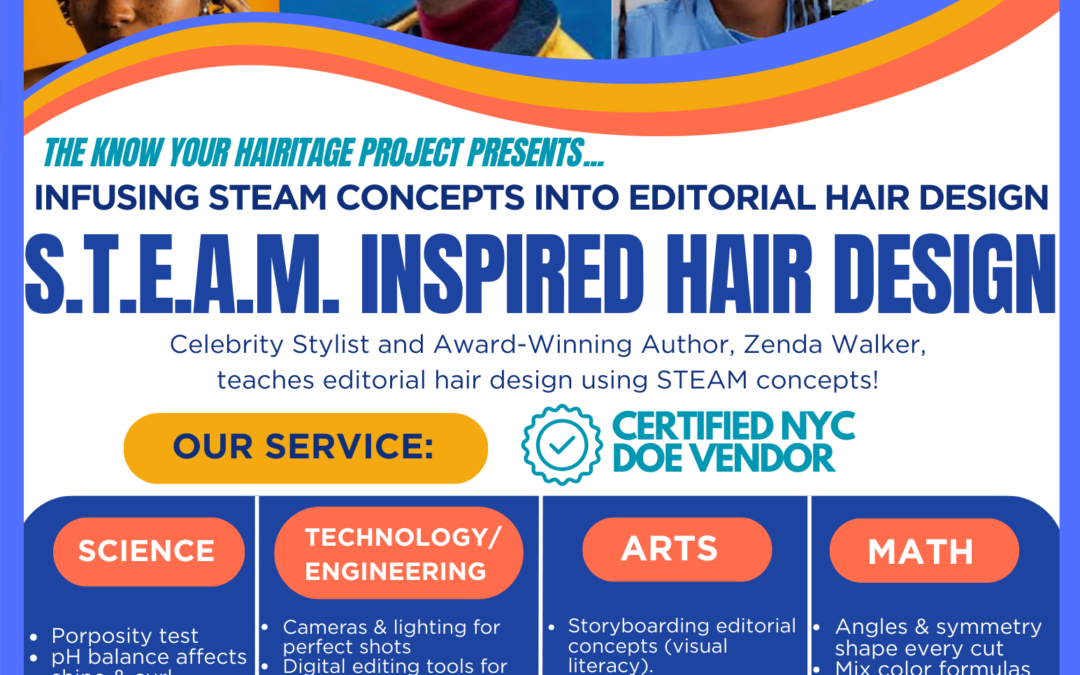
Every licensed cosmetologist studies chemistry, anatomy, infection control, sanitation, state safety regulations, and applied mathematics. They analyze variables, solve problems in real time, communicate with diverse clients, manage inventory, build businesses, interpret digital analytics, and increasingly use technology to market and operate successful enterprises.
Those aren’t “soft skills.”
They are technical, scientific, entrepreneurial, and deeply human competencies.
The U.S. Bureau of Labor Statistics projects approximately 84,000 openings for barbers, hairstylists, and cosmetologists each year over the coming decade, reflecting both continued demand and workforce turnover. At the same time, education leaders continue to elevate Career and Technical Education as an essential strategy for workforce development and economic mobility.
These trends raise an important question.
If cosmetology requires technical knowledge, scientific understanding, business acumen, and professional licensure—and continues to represent a significant workforce sector—why is it so often absent from conversations about the future of work?
I don’t believe the answer is found in the profession itself.
I believe it’s found in our perception of it.
Throughout history, society has assigned different levels of prestige to different forms of knowledge. Some professions are immediately recognized as technical. Others, despite requiring equally sophisticated expertise, are viewed primarily through cultural stereotypes.
That perception matters.
Because when students don’t see certain careers respected within educational spaces, they may never recognize the full range of opportunities available to them.
This realization has become one of the foundational ideas behind what I call The Hairitage Framework™.
The Hairitage Framework begins with a simple premise:
Learning becomes more meaningful when educators use culturally rooted practices, traditions, and lived experiences as entry points to rigorous academic learning, identity development, belonging, and career-connected exploration.
Hair is not the lesson.
Hair is the bridge.
For one student, that bridge might be hair chemistry.
For another, it might be family recipes, quilting traditions, spoken word poetry, sneaker design, music production, or neighborhood entrepreneurship.
The bridge changes.
The destination does not.
The destination is deeper learning.
The Hairitage Framework challenges educators to begin with what students already know, value, and experience—not because culture replaces academic rigor, but because it creates authentic pathways into it.
This perspective aligns naturally with the goals of modern Career and Technical Education. High-quality CTE isn’t simply about preparing students for jobs. It develops critical thinking, collaboration, communication, problem solving, adaptability, and entrepreneurship alongside technical knowledge. These are precisely the kinds of durable human skills that remain essential in an economy increasingly shaped by automation and artificial intelligence.
Perhaps the question isn’t whether cosmetology belongs in STEM.
Perhaps the better question is whether our understanding of STEM has become too narrow to recognize all the places rigorous learning already exists.
Education has always evolved by expanding its understanding of intelligence, talent, and possibility.
Maybe it’s time to expand our understanding of where those qualities live.
If we truly believe every student deserves to see themselves in the future of learning, then we must also be willing to broaden our definition of what counts as valuable knowledge.
Because when we change what we recognize, we also change what students believe is possible.
About the Author
Zenda M. Walker is the founder of Know Your Hairitage LLC, an award-winning author, licensed cosmetologist, educational consultant, and graduate student at the Harvard Graduate School of Education. She is the creator of The Hairitage Framework™, an educational framework that uses culturally rooted practices as pathways to rigorous learning, belonging, identity development, and career-connected education. Rethinking Learning is her ongoing essay series exploring the ideas shaping the future of education.